
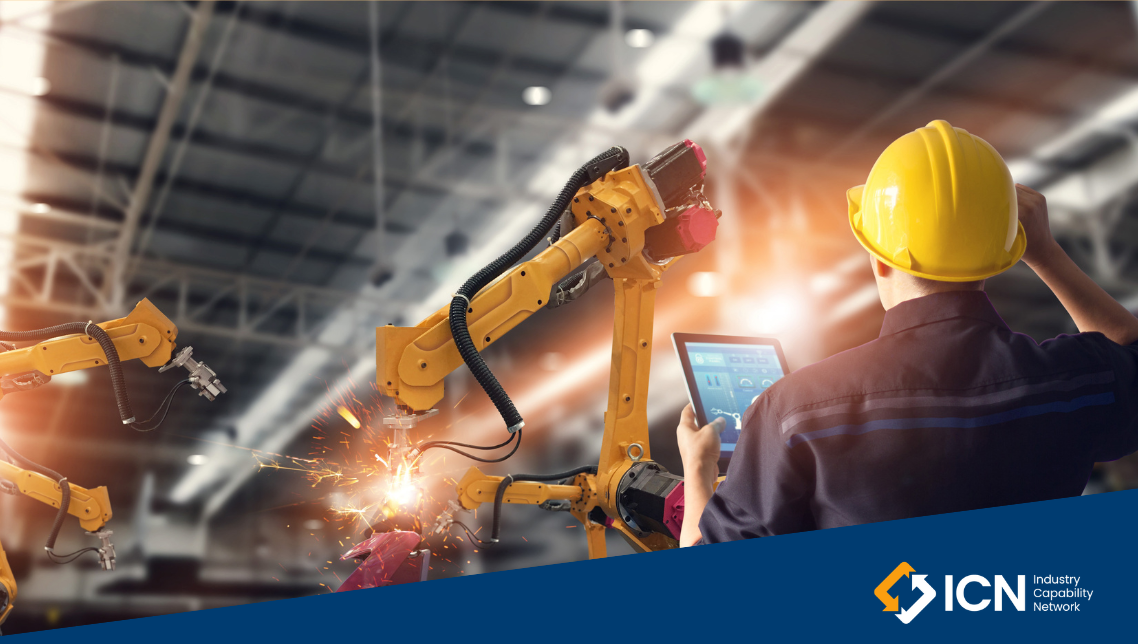
Advanced manufacturing to drive industry success. If the news media is to be believed, the Australian manufacturing industry has been in dire straits for some years now. But if the industry faces challenges head on, the future is bright.
A critical first step in the long-term commercial success of this vital industry is to adopt advanced manufacturing and technology.
By moving away from low-cost, high-volume production to high-value, specialised goods, the industry can remain competitive against cheaper imports.
As part of its $22.7 Billion Future Made in Australia plan, the Australian Government has recognised the importance of advanced manufacturing in Australia to help maximise the economic benefits of the move to net zero and secure Australia’s place in a changing global landscape.
The government has made it clear that advanced manufacturing is a crucial component of its economic strategy. Its stance is that Australian manufacturers can be globally competitive by focusing on high value-added niches and leveraging advanced manufacturing processes and Industry 4.0 technologies, such as R&D, quality, safety and trust, rather than competing solely on cost.
In fact, in its response to the House of Representatives Standing Committee on Industry, Science and Resources report on advanced manufacturing, the Australia Government said it was ‘focused on accelerating our future technological potential in advanced manufacturing’.
The government has also invested $15 billion in the National Reconstruction Fund, designed to support projects that develop, diversify and transform Australia’s industrial and manufacturing capability.
There’s no doubt that advanced manufacturing can help Australian businesses to innovate, differentiate and compete on a global scale, creating new markets and opportunities for growth.
It can also contribute to the development of new industries and the growth of existing ones, particularly in high-growth sectors such as renewables, medical science and defence.
Examples of advanced manufacturing include:
- Increasing the use of robotics, AI, and the Internet of Things (IoT) to boost productivity and offset the challenge of a declining work force.
- Implementing “Smart Factories” and Industry 4.0 technologies like digital twins and advanced analytics to optimise processes, improve quality control and enable greater customisation.
- Investing in innovative and technical startups that have the potential to become large, globally competitive manufacturers.
However, while large manufacturers naturally get more attention and have the funds to support advanced manufacturing, it is SMEs that drive a large share of the supplier base, job creation and capability development. Yet many struggle with technology adoption, capability uplift and accessing opportunities.
Even when SMEs are able to adopt technology, it can be difficult to find people to operate it, due to significant skills gaps in areas like robotics engineering, data analytics and advanced trades.
Thanks to a strategic partnership between Industry Capability Network (ICN) and the Advanced Robotics for Manufacturing Hub (ARM Hub) it’s about to get easier for manufacturing SMEs to survive and thrive.
The partnership combines ICN’s extensive national industry and supplier network, data insights and supplier development expertise with ARM Hub’s world-class robotics and Industry 5.0 capabilities and includes accelerators and programs for companies adopting advanced automation, AI and smart systems.
It will give SMEs access via ICN to ARM Hub’s programs and via ARM Hub to ICN’s network and insights, reducing barriers to technology adoption, connecting to larger project opportunities, and building competitiveness.
The collaboration will drive advanced manufacturing for SMEs through several practical mechanisms, including:
- giving technologically ready SMEs exposure to major projects and targeted opportunities.
- upskilling SMEs through access to ARM Hub’s technical expertise and programs, including training in AI and Industry 4.0
- fostering a high-functioning AI ecosystem by providing smaller tech businesses with real-world testing and implementation pathways.
To put in simply, ICN and ARM Hub are working together to directly address the two biggest hurdles for SMEs: knowing where the high-value work is and having the modern, technological capability to win and deliver it.
And the timing is right. The manufacturing sector is under pressure and needs to raise its game. This collaboration will go a long way to addressing address capability, technology and network-connectivity gaps.
With a mission to promote growth, sustainability and inclusivity, ICN is playing a pivotal role in shaping the trajectory of Australia’s advanced manufacturing strategy.